
RIC Brings College-Level Social Work Course to the Community
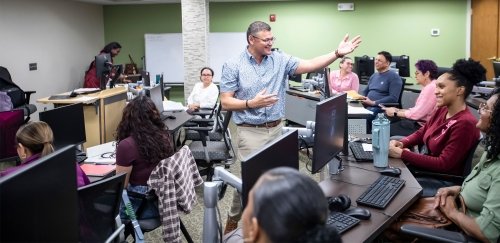
An animated discussion filled a classroom at the RIC Workforce Hub in Central Falls during a recent evening class. About 20 students – many Latino and Cape Verdean community members – debated ideas, asked questions, shared personal experiences and connected lessons to their communities and workplaces.
The atmosphere was welcoming and engaging. Students seemed comfortable speaking openly while remaining deeply focused on what instructors and program coordinators were sharing. At times, the room erupted in laughter; at others, conversations shifted into serious social work discussions about crisis intervention, support systems and the realities facing vulnerable communities.
Instructor Michael Andrade guided the session with energetic gestures and accessible language, encouraging participation and fostering a collaborative exchange of ideas rather than a traditional lecture.
The class, SWRK 200: Introducing Social Work and Social Justice, is the first four-credit course offered through the Rhode Island College School of Social Work’s Atrévete Center of Excellence. The initiative is supported by a grant from the Health Resources and Services Administration of the U.S. Department of Health and Human Services, designed to reduce barriers to higher education.
The course introduces students to the various social work careers through scenario-based learning and case studies. It also lets them explore the wide range of career paths in the field, including child welfare, crisis mediation and intervention, domestic violence services, community organizing, and policy issues and advocacy.
“One of our goals is to introduce people to social work as a career and build a pipeline for community members to begin thinking about college,” says RIC Professor of Social Work Jayashree Nimmagadda, one of the program’s organizers. “We especially wanted to reach adults who may already have some college credits or are already working in social services.”
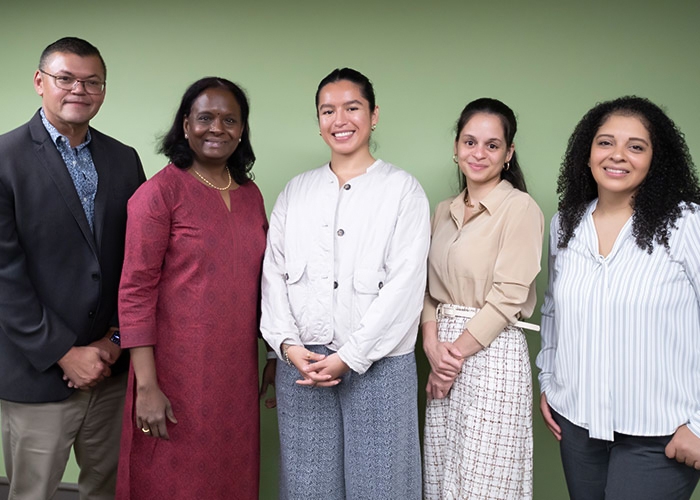
Rather than offering a noncredit certificate program, the organizers intentionally structured the course so that students could earn transferable college credits valid for seven years. This will help them continue toward a bachelor’s degree or another academic pathway.
“I’m not a big fan of having people sit in classrooms for hours just to receive a certificate of attendance,” says Nimmagadda. “Offering college credits gives them a step to climb up.”
The course’s second instructor, Assistant Professor of Social Work Estrellita Moronta, notes that through this initiative, students learn about social work and its values while deciding whether this is the right career path for them.
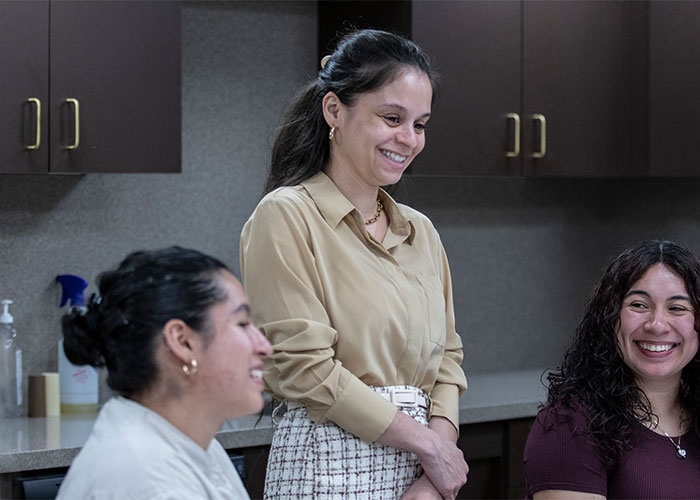
All of the organizers agree that this course arrives at a critical moment for the social service and behavioral health workforce.
At a time when fewer people are entering the helping professions and the demand for services continues to rise – particularly as the population ages – this program helps participants see social work as achievable and significant, says Andrade.
“Now more than ever, it’s time to invest in the human services workforce,” he says. “We need to engage people earlier and help them see that this can be a very meaningful career.”
Unlike traditional college courses held on campus, SWRK 200 is designed for nontraditional students, including adults balancing work, family responsibilities and a return to education.
“The Hub is a space in the community that people know,” says Nimmagadda. “It removes some of the institutional structures, making it friendlier and more accessible. Many first-generation and returning students can feel intimidated navigating a college campus for the first time. At the Hub, they get entry into college life in a space that feels accessible.”
For student Sandra Escobar Cortés, a 51-year-old professional in community development, social work and law, with a master’s degree in political studies and 24 years of experience, who arrived two years ago from Colombia, the decision to take this course at the Hub came as an opportunity to start building her career in the United States.
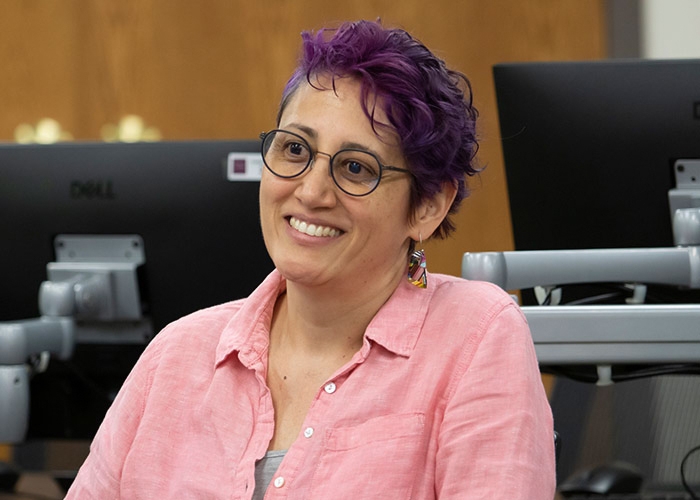
“I want to put my professional knowledge at the service of my community. I am studying to become a community health worker and I’ve observed firsthand the experiences of social workers in this country,” she says. “The SWRK 200 course has helped me identify with greater certainty the path I wish to pursue. It is a stepping stone toward earning my master’s degree in social work at RIC, which will lead me to my ultimate goal: to practice in the mental health sector.”
The program aims to make space for bilingual students as well. While English remains the primary language of instruction because of higher education requirements, Nimmagadda says organizers hope to create more flexible opportunities for students who are more comfortable expressing themselves in their native language.
“Faculty members like Moronta, who is fluent in Spanish, and Andrade, who speaks Portuguese, may assist students who choose to complete certain assignments in their own language,” says Nimmagadda.
“Having the opportunity to be part of the learning process for bilingual community members is heartwarming, as the Center of Excellence advances its overall goal of increasing the number of bilingual social workers in the community,” says Moronta. “It is such an honor to be a part of this macro change in the state of Rhode Island. I am excited about the impact this class will have on these students and eventually the community.”
Learn more about RIC’s School of Social Work.