
Sonya Cheteyan: One of 1st to Earn Degree in Artificial Intelligence at RIC
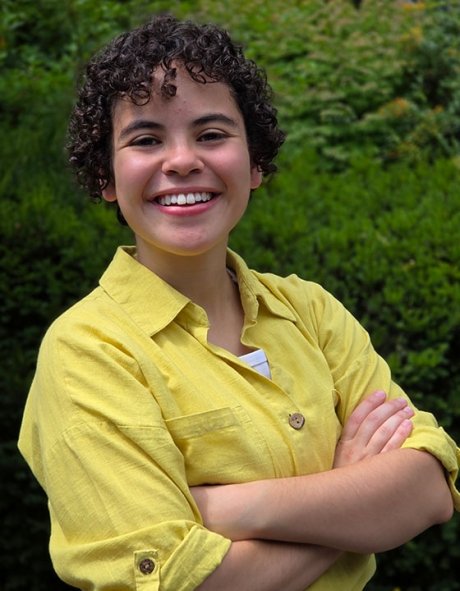
Two years ago, RIC created a new degree program that teaches students the art of teaching machines – the B.S. in artificial intelligence (AI).
One of the first to graduate from that program is 21-year-old Sonya Cheteyan. She holds a double major in both AI and computer science and graduates with a 4.0 in both majors.
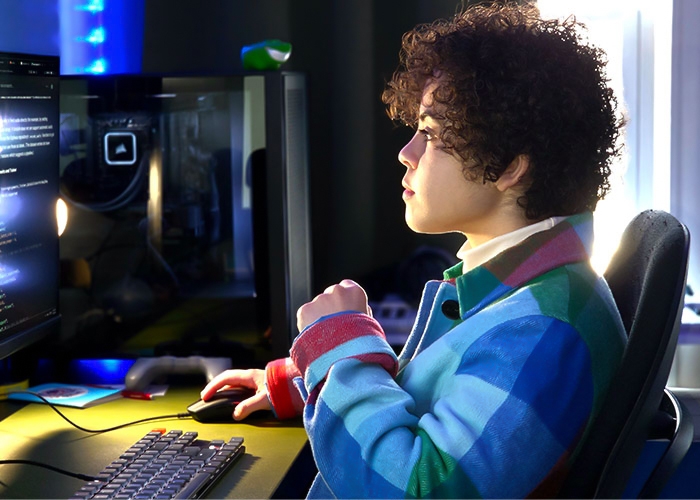
Cheteyen entered the field of computer science by happenstance.
“I was riding the bus home from Classical High School and was bored, so I decided to download an app to my phone on how to code,” she says.
It would be her first step into the world of computer science and a giant leap into shaping the future through code, curiosity and relentless problem-solving.
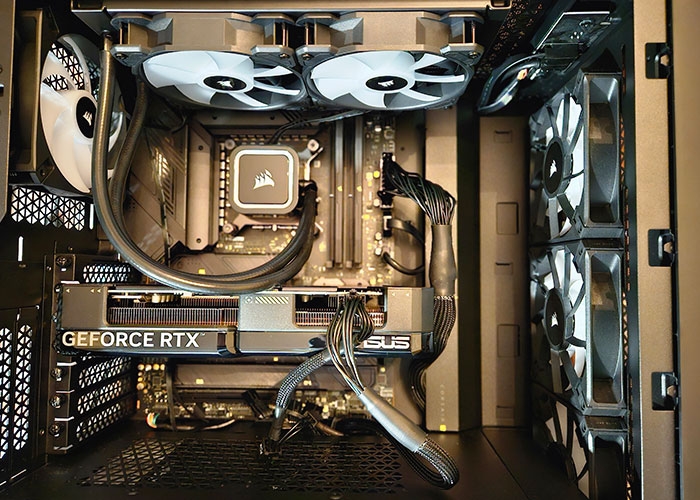
Cheteyan would also later build her own desktop computer.
Coding is a tool computer scientists use to bring about a solution to a problem; however, computer science itself is about solving problems using computers. It requires creativity.
“Coding is actually a type of creativity,” said Cheteyan in an interview with the Rhode Island Current. “I know a lot of people say it’s math, but you have to think, you have to come up with good solutions to problems and you need a creative mind for that.”
Cheteyan and a team of three other RIC computer science majors recently participated in a 24-hour Hack-a-thon at URI, which drew more than 100 student participants from colleges and universities across New England. They were tasked with applying AI to a real-world problem.
It was Cheteyan who came up with the idea to engineer an app for people with auditory processing disorders, meaning people who are deaf, autistic or have phone anxiety. This app would turn their phone calls into a text conversation.
The team created an AI-powered that won the top prize, earning them $3,000 and an all-expenses-paid trip later this year to participate in a hack-a-thon at the United Nations in New York City.
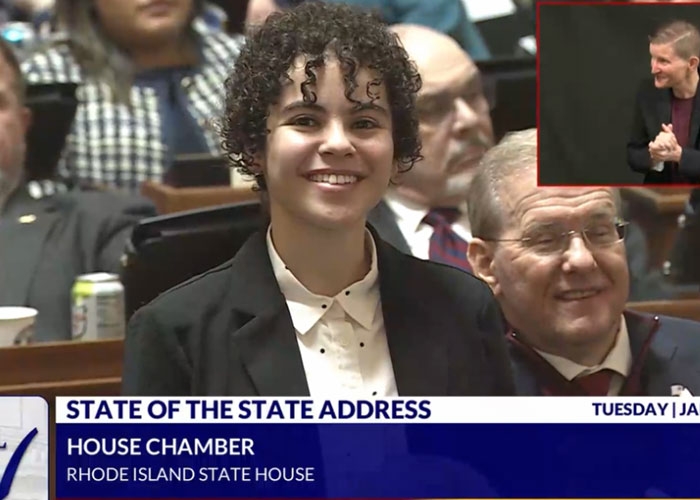
At his 2026 State of the State Address, R.I. Gov. Dan McKee recognized Cheteyan – a Hope Scholar – for her academic achievements.
She is active on campus as a member of Student Community Government, Inc. and a member of the Upsilon Pi Epsilon Honor Society whose membership consists of outstanding undergraduate and graduate students in computing and information disciplines.
Cheteyan will begin her master’s degree in computer science at Brown University this fall.
In this Q&A, she talks AI.
What is “artificial” about artificial intelligence?
It’s artificial because it mimics human intelligence. It’s not real intelligence. AI can only do what it’s trained to do. It can only be as intelligent as the data you give it, and the data has to be formatted in a way that AI can understand.
How does AI learn?
AI learns through the data you feed it. With enough data, AI is able to perform the tasks that you want.
What if you ask AI a question that it doesn’t have the data for?
Imagine AI as a library of 10,000 books; it knows 10,000 things. If you ask it something it doesn’t know, it has to go get the book from some other source, which is the Internet. It performs what is called Retrieval Augmented Generation.
In one of your class projects, you trained AI to identify pneumonia in lung X-rays. How did you do that?
That was a learning experience for me. It was my first step in learning how to train AI to perform a task. The only thing AI needs to identify pneumonia is data. I needed to download a lot of images – thousands of X-ray scans of lungs labeled by professionals – gigabytes of data – it was huge, and I converted it to PNG format because it was in DICOM [Digital Imaging and Communications in Medicine] format. It took me an entire semester to train the model because what I trained it to do didn’t work at first. There was a lot of trial and error. I learned a lot about the math behind it and how the code looks so I could recreate it again.
And you built your own computer while working on that project?
I did build my own computer, which is how I was able to train AI to identify pneumonia in X-ray scans. By building it myself, I could train AI to do what I wanted. And if a computer part breaks or if I want to upgrade my computer, I can do it myself.
Are you concerned that AI is taking over tasks at work and at school that are making humans less capable, less intelligent?
I attended a presidential forum at RIC on AI and how AI is affecting school and work. One of the main criticisms is that AI is making things easier, which means we’re not going to learn and we’re not going to work.
My idea is why not let students do the things that AI can’t do. Instead of asking students to write essays to show what they’ve learned about a topic, let them show you in a way that doesn’t require AI. What about in-person group discussions?
As far as work, if we’re letting AI do the easy things for us, then let humans do the more difficult things. For instance, because AI can code, many businesses aren’t hiring interns to do the easier tasks anymore and are loading that work onto junior and senior developers. Whether this is a good decision is heavily contested. But it can also mean that interns now have the opportunity to do more difficult tasks, such as taking on the role of a junior developer, which means the junior developer can now take on the role of a senior developer.
You’ll be doing an internship this summer in data engineering, where you’ll be using both your AI and computer science skills. Explain data engineering for the layperson.
Imagine AI as the library we spoke about earlier, but it also has a library card that lets it borrow books from any library. Data engineering is essentially building the library and its books so that AI can read them. As data engineers, we have to structure data into a library that a model [AI] can read, understand and make predictions based on. We can even share our new library cards with other engineers so they can use our library with their AI models. Data engineering requires both coding and AI training experience. We need to know which data is important, find it and structure it for an AI model.
What’s one word you would use to describe AI’s future?
Revolutionary.
(In her down time, Cheteyan is an avid gamer and creates electronic music.) Learn more about the Artificial Intelligence B.S. and the Computer Science B.A., B.S. programs at RIC.