
RINEC is one of only 19 organizations nationwide that have earned this accreditation.
PROVIDENCE, RHODE ISLAND (May 29, 2026) – Human simulation programs, the backbone of nursing education for University of Rhode Island and Rhode Island College nursing students, earned full accreditation by the Association of Standardized Patient Educators this month. The simulation programs are delivered at the Rhode Island Nursing Education Center in Providence, a shared facility between Zvart Onanian School of Nursing at Rhode Island College and University of Rhode Island College of Nursing, that is administered by the Rhode Island Office of the Postsecondary Commissioner.
Association of Standardized Patient Educators is the leading global organization on best practices in human simulation. Accreditation of a simulation program provides validation that the organization meets ASPE’s Standards of Best Practice. RI Nursing Education Center is one of only 19 organizations nationwide that have earned accreditation status by meeting highly rigorous and specialized specifications. Programs must provide extensive documentation listing policies, procedures, evidence of quality improvement, and proof of consistent practice over multiple years.
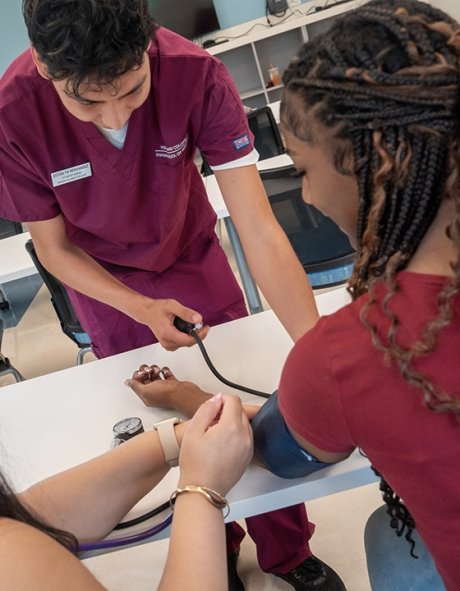
Both University of Rhode Island and Rhode Island College run their individual programs at RI Nursing Education Center and host their undergraduate and graduate courses there, including simulations and hands-on skills training. RI Nursing Education Center is a comprehensive simulation center designed to support immersive education, competency-based training, and standardized patient methodology aligned with the standards of the Association of Standardized Patient Educators. In addition to traditional classrooms, it features simulation suites, an operating room, an emergency department suite, and a home-care setting space all equipped with manikins and medical equipment found in real-world clinical settings.
“Congratulations to University of Rhode Island and Rhode Island College, and to the staff of the RI Nursing Education Center for this outstanding professional achievement,” said Rhode Island Commissioner of Postsecondary Education Shannon Gilkey, Ed.D. “The simulation programs together with a state-of-the-art nursing training facility are preparing prospective nurses so that they can move seamlessly into the workforce upon graduation and licensure. This advanced level of training, aligned with the highest standards of the ASPE, drives up competency levels among our state’s nurses.”
“Our core support from University of Rhode Island and Rhode Island College is immeasurable,” said Bonnie Rayta, Ph.D., CHSOS-A, the director of RI Nursing Education Center. “Penni Sadlon, PhD., RN, CHSE at Rhode Island College and Assistant Clinical Professor/Simulation Educator Coordinator Jessica Skaltsis DNP, RD, CHSE at University of Rhode Island bring formidable experience in education, simulation-based training, and clinical practice to help nursing students grow in their skills and knowledge about their chosen careers. Their expertise in working with simulation and incorporating it into a curriculum is unparalleled, and they were instrumental in helping the programs achieve accreditation.”
“We would like to congratulate the RI Nursing Education Center team on achieving full accreditation in human simulation from the Association of Standardized Patient Educators,” said Justin DiLibero, dean, Zvart Onanian School of Nursing at Rhode Island College. “This impressive accomplishment reflects RINEC’s leadership in simulation-based education and underscores its vital role in nursing education, helping develop a highly skilled, practice-ready nursing workforce. We commend the entire team on this outstanding achievement and look forward to our continued partnership as we work together to enhance nursing education and support Rhode Island’s nursing workforce.”
“RI Nursing Education Center’s ASPE accreditation is incredibly meaningful not only to the University of Rhode Island College of Nursing but to the State of Rhode Island as a whole,” said Skaltsis. “This recognition reflects a strong commitment to excellence in preparing future healthcare professionals through realistic, high-quality learning experiences that build confidence, strengthen communication, and develop clinical skills — all grounded in our foundational value of caring. At a time when healthcare systems face growing workforce challenges, investments in exceptional training directly benefit our communities by helping ensure a stronger, more prepared healthcare workforce. We are proud of our partnership with RI Nursing Education Center and our shared commitment to preparing the next generation of compassionate, practice-ready nurses who deliver care with competence, empathy, and unwavering dedication.”
The terms standardized patient and simulated patient (SP) are often used interchangeably and refer to a person trained to portray a patient in realistic and repeatable ways. SPs interact with learners in experiential education and assessment contexts.
The use of simulated patients in education took flight in 1963. Educators found that simulated patients offered not only a variety of teaching opportunities for students, but also opportunities for testing student performance. Out of this testing environment grew the term “standardized/simulated patient/participant” or “SP.” It is widely used in nursing education throughout the U.S. The Association of SP Educators helped expand the practice into many fields including dentistry, pharmacy, veterinary medicine and allied health professions.
The Office of the Postsecondary Commissioner supports the work of the Board of Education and the Council on Postsecondary Education in providing an excellent, accessible and affordable system of higher education designed to improve the overall educational attainment of the citizens of Rhode Island, support economic development, and enrich the civic, social and cultural life of all living in the state of Rhode Island. It manages three education centers: RI Nursing Education Center, Woonsocket Education Center and Westerly Education Center. Visit riopc.edu for additional information.
Rhode Island College is a regional comprehensive public college that serves approximately 6,500 undergraduate, graduate and doctoral students through its five schools: The Faculty of Arts and Sciences, the Feinstein School of Education and Human Development, the School of Business, the School of Nursing and the School of Social Work. Established in 1854, it is Rhode Island’s first public institution of higher education.
The University of Rhode Island is a diverse and dynamic community whose members are connected by a common quest for knowledge. As a global education leader and the state of Rhode Island's flagship public research institution, URI offers distinctive opportunities designed to meet the global challenges of today's world and the rapidly evolving needs of tomorrow. Founded in 1892, URI now enrolls more than 18,000 students and offers more than 200 degree programs across nine schools and colleges. As a land- and sea-grant institution, URI is a key driver of economic development in Rhode Island and contributes significantly to the health and vitality of the state, the New England region, and the nation. To learn more, visit: uri.edu.
-###-