
Why Every RIC Student Needs an Academic Advisor

If you’ve heard that academic advisors are just box checkers making sure you’re taking the right courses, you haven’t been to RIC’s Office of Academic Advising. They’re checking off more than your courses; they’re checking on you to see how school and life in general is going. They want to make sure you’re successful in all areas of your life.
The Office of Academic Advising serves first-year declared majors in the schools of business, education, nursing and social work; as well as undeclared majors and medical imaging and nursing intended majors.
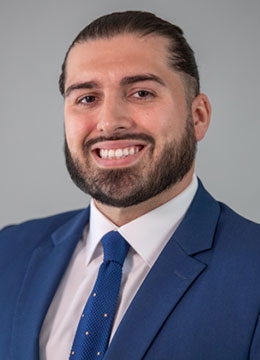
“And we don’t wait for students to come to us,” says Assistant Dean of Student Services Chris Da Costa.
“As soon as a new student makes their deposit in May, they get an email from us as early as June asking them preference-based questions, programmatic questions and questions about AP/EEP credits. Based on their responses, we pre-register them for classes.
“Then they get another email from us, saying, ‘You’re registered and good to go.’ Or ‘Hey, it looks like you only registered for 10 credits. That means you’re part time. You could lose your Hope Scholarship before you even start classes.’
“After classes begin in the fall, we do a mid-term outreach, emailing any student with a C-minus or below.”
And the Office of Academic Advising follows the progress of students throughout their first year, supporting a multitude of needs, including struggles they may be having with classes. Through a shared online platform called Starfish, faculty can raise an early alert flag whenever a student is beginning to falter academically. It may be an attendance alert, or an assignment alert or a lack-of-engagement-in-class alert.
When a student is no longer on good academic standing, the student is asked to participate in academic coaching at the Office of Academic Advising, learning time-management skills, habit building and goal-setting skills.

Da Costa and Assistant Director of Academic Advising Sara Reilly review Starfish alerts daily, multiple times a day.
“Though a lot of our early conversations with students do circle around academics and performance,” says Reilly, “such as, ‘Are you enjoying this subject? What do you think of your professors? Are you struggling with this kind of assignment?’ – more often than not, we’re checking in with them to see how they’re doing overall. We’ve had several sessions of training with the counseling center to identify students in crisis or students who may need additional support outside of our office.”
Academic advisors also expedite the career conversation with students. It may not be in the first meeting, but it is within the first couple of meetings when they begin to discuss future careers with students. “The reality is that a student’s major and the career they want to enter shouldn’t be separated,” says Da Costa.
The Career & Life Design Center and the Office of Academic Advising are not only next-door neighbors, the two offices work in tandem.
If a student is uncertain about their major, they are immediately referred to a career specialist who will help them dive deep into their interests and their skill sets to get a sense of what direction they might want to take.
“Every student who comes here, is advised to see a career specialist,” says Da Costa. “Whether they’ve declared a major or are still exploring – all students, in the broad sense, are still exploring. If a student is completely lost, we send them to the career center. If they’re super certain about their future career, they still need to know the next step to make that career happen. You may have a 4.0 but where are you looking for jobs? Who are you connected to in the industry?
“There are some first-year students who are only focused on getting through their classes. But by the end of their first semester, we absolutely want to get them over to the Career & Life Design Center.”
If a first-year student attains 30 credits or gets accepted into the nursing or medical imaging professional program, they transition to a faculty advisor. According to Da Costa, students shoot for that 30-credit threshold by their first year, but others transition earlier.
All first-year students are encouraged to make an appointment with an advisor at least two to three times a semester. Currently, the Office of Academic Advising serves 1,200 students. According to their last survey, students feel overwhelmingly positive about the office. 49% report meeting with an advisor three or more times a semester, while 75% report meeting an advisor twice or more a semester.
Da Costa advises, “If you want a transactional experience, come to our office for registration. But if you want a transformative experience, continue to come to our office. If you don’t know where to start on your life journey, we’re a good place to start.”
Da Costa is co-lead on the Presidential Advising Priority Group. Reilly also serves on the advising charter. Together, they’re actively working with the Provost Office and faculty on advising practices not only within their office but unilaterally across campus.
The Office of Academic Advising is located in Adams Library, Lower Level. Call 401-456-8083, if you are looking for advising support. Students can book an appointment through Starfish.