
The Beauty in Abandonment – Photography of Simone Emerich

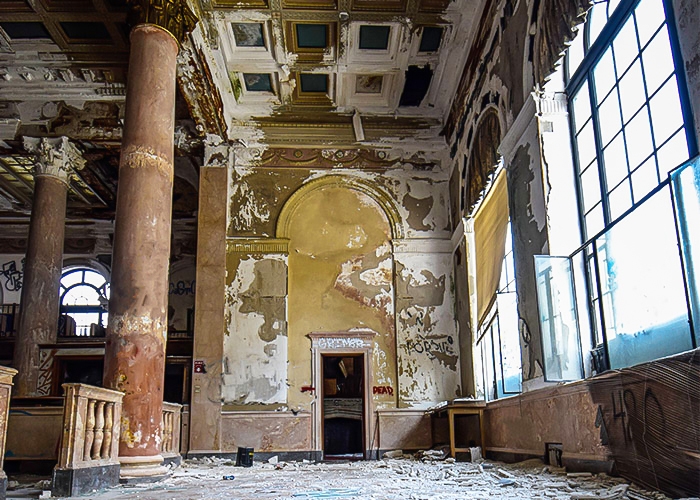
“I’m drawn to the beauty of abandoned buildings and forgotten spaces,” says graduating senior Simone Emerich. “My work explores themes of memory, decay and emotional resonance.”
Emerich is a 25-year-old studio art major, concentrating in photography. Her fascination with abandoned buildings, she says, began in sixth or seventh grade.
“I was adopted as a six-month-old from Guatemala,” she says. “I struggled with this feeling that if I did anything wrong, my parents would give me back. Then one day, I stumbled across this abandoned house and I fell in love with it. I saw the beauty it once had and the beauty it currently had and that it held these stories that neither I nor anyone else would ever know. I wanted to capture images of it to show people that you may pass by this building every day. It may appear to be ugly, but it’s actually beautiful. It’s no longer new, but it still deserves love and attention.”
The symbolism is obvious: the abandoned child, a child no longer wanted yet beautiful and worthy of love.
“I see beauty in the texture of peeling paint,” say Emerich. “There’s beauty in how mother nature was reclaiming that building, the roots of trees lifting up the floorboards and coming through the floor. By taking a photo of that, I could hold onto that image of beauty forever. I think my work really explores and challenges the idea that abandonment should be sad. I show the beauty in abandonment.”
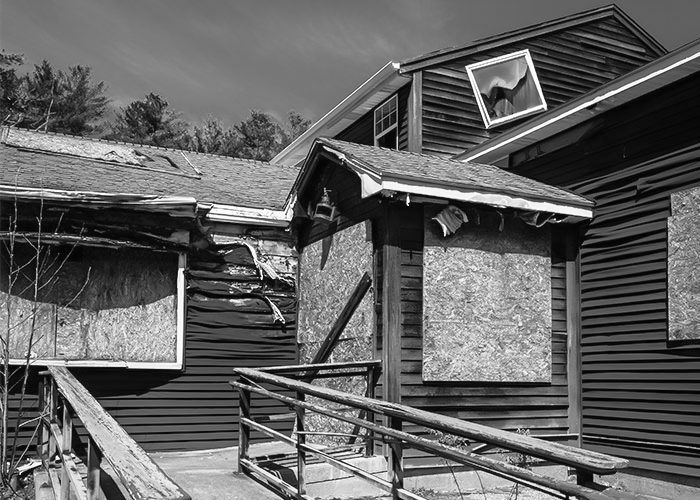
Emerich takes photos both in color and in black-and-white. Color – and the lack of it – affect the viewer’s emotional reaction to the image, she says.
“With black-and-white photos, I’m controlling what you see,” she says. “Black-and-white photos take the opinion away from the viewer. But color photos allow you to decide how to feel. And they confront you. They won’t let you off the hook. You have to deal with the reality of the image.”
Emerich began taking photos at age eight or nine. “I was fascinated by the fact that a camera could capture what I saw forever,” she says.
“If there was a random leaf on the ground, I would say, ‘I love that leaf and now I can keep it forever.’ I took photos of everything I saw, because I wanted to be able to keep everything I saw for as long as I could,” she says.
Along with abandoned buildings, Emerich is inspired by liminal spaces. A liminal space is an empty space that gives a feeling of unease, or eerie, dreamlike nostalgia – spaces such as empty hallways, empty parking lots, empty train stations, laundromats, stairwells and gas stations at night.
“There’s a sense of loneliness in these empty spaces. Yet there’s a beauty in the aloneness,” she says.
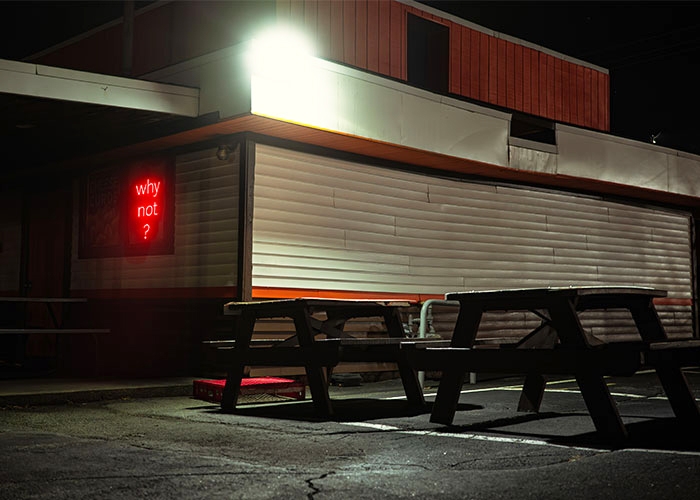
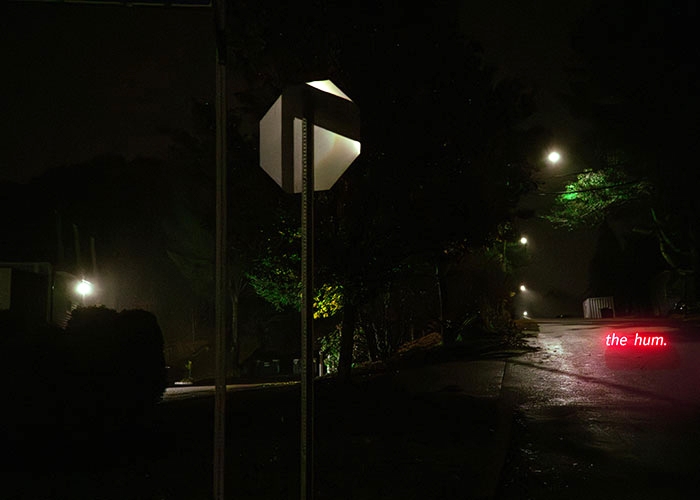
Emerich graduates from RIC this May. She intends to continue to feed her passion for this art form. As a fine art photographer, she also doubles as a storyteller. “Each photo,” she says, “tells a story. I think that’s what really drives me to want to continue photographing.”
Emerich also extolls the education she received at Rhode Island College.
“I would absolutely recommend RIC's art program to anyone,” she says. “First, the facilities are great. You have access to the darkroom; you have access to state-of-the-art computers and programs for editing your photos; you have printers, which, if I were to go out into the real world to get my work printed, the cost would be astronomical, but to have this equipment available to me is a godsend.”
“The professors are also great. They all have their own different styles and personalities, but they all have one goal in mind which is to help you do the best you can and to push you to go past it. It’s refreshing to learn under people who’ve been in the game for a lot longer than I have,” she says.
If there’s any advice Emerich says she will walk away with, it’s the words of RIC Professor of Photography Amy Montali.
“Amy said art is about taking risks. Take the photos you like to take regardless of how other people feel about them.
“I also carry with me the words of my photography teacher at CCRI who once told me, ‘Chase the feeling that abandoned buildings give you. Chase that feeling and you will never run out of ideas and photos to take.’”
Learn more about RIC’s Art: Studio Art BA, BFA program.