
English Department Spring Course Descriptions

Overview

The English major at Rhode Island College offers the opportunity to explore literature, creative writing, and professional writing. All majors learn to read texts critically, to understand the historical and cultural conditions within which texts are produced, and to practice critical, creative, and practical writing. 

Your introduction to the major begins with English 200, which emphasizes close reading and acquiring a critical vocabulary and methodology. Creative writing majors also take English 220, the introduction to creative writing. All 300/400 level courses are designed to follow up on 200-level courses and to prepare you for the capstone course, English 460.

Early Spring (December 29, 2025 – January 16, 2026)

MW 1:00 pm–4:50 pm (In-person) Quintana Vallejo

Explore the challenges of growing up through pictures and words in ENGL 250: Growing up in Graphic Novels. This class looks at how graphic novels tell stories about adolescence and self-discovery. We'll read graphic coming-of-age tales that question the way society sees young people. We'll discuss how words and pictures work together to capture the ups and downs of growing up, looking at stories by well-known authors and artists to understand how different media come together to tell powerful tales. This course does not have exams and, instead, requires active class participation and a creative adaptation project.

MTWThF 4:00 pm – 6:20 pm (Hybrid) Potter

This class examines narratives of cultural contact both "factual" and "fictional” between European explorers of the Arctic and its indigenous peoples in the comparative context of European and American colonialism, visual representation, and emergent literatures. Material will include historical accounts, fiction, and film, as well as music and other performative arts. Requirements include attendance, active participation in discussion, a weekly response paragraph, and two 4-6 page critical essays, each of which will go through a draft reading process.
Spring (January 20, 2026 – May 4, 2026)

TuTh 8:00 am – 9:50 am (In-person) Hawk

What does it mean to be an English major? How do we read, think about, analyze, and critically write about literature and culture? How does close reading help us to engage with the world around us? These are just a few of the questions we will explore in this course, as we explore what “close reading” means for literary studies. Content will include poetry, plays, short stories, essays, and film. Requirements include engagement in class discussions and three essays.

MW 10:00 am – 11:50 am (In-person) Abbotson

This course introduces how English majors might approach literary writing that includes fiction, drama and poetry—for pleasure, enlightenment, insight, and greater knowledge. This is not a heavy reading course, but students will consider how to develop and advance their critical skills in terms of reading and writing and be given the opportunity to practice these skills on a variety of verbal and non-verbal texts. There will be an emphasis on close reading throughout, alongside an encouragement toward familiarity and confidence in using critical terminology, methodologies, and proper literary style formatting at the college level. Requirements include class participation, quizzes, midterm, final, and three essays (4-6 pages). This is a Writing in the Discipline course.

TuTh 10:00 am – 11:50 am (In-person) Holl

This course will examine the ways that British writers from 1500-1800 both shaped and responded to their changing social, political, and cultural spheres. As we read the plays and poetry of Marlowe and Shakespeare; the satires of Swift and Pope; the erotic verse of Marvell, Herrick, and Behn; and the brave new worlds of More and Cavendish, we’ll discuss the ways that early modern and eighteenth-century writers engaged with their contemporary worlds on issues such as power dynamics, religious debate, social and economic inequities, gender, and sexuality. Course requirements include active participation, two papers, and two exams.

MW 2:00 pm – 3:50 pm (In-person) Duneer

This course is an introduction to a broad range of writers, genres, and themes that have helped shape an evolving American literary tradition. We will attempt to situate course readings within major historical, cultural, and literary movements: Exploration; Puritanism; Revolution and Enlightenment; Romance, Transcendentalism, and the American Gothic; Slavery and Race; Realism and Naturalism; the Harlem Renaissance; Modernism, Postmodernism and Contemporary Multicultural Literature. We will consider writers’ responses to philosophical, social, and political debates, while keeping an open mind to the ways in which texts resist categorization, and how authors imaginatively blend tradition and innovation to express the complexity and diversity of American experience. Requirements include active participation, reading quizzes, informal writing, an exam, and a formal paper.

TuTh 2:00 pm – 3:50 pm (In-person) Quintana Vallejo

Why do books for young people get banned? What do these bans show about social and cultural taboos? In this course, we will answer those questions by studying adolescent literature by authors Madeline Miller (The Song of Achilles), Margaret Atwood (The Handmaid's Tale), Suzanne Collins (The Hunger Games), and Toni Morrison (Jazz). This course does not have exams and, instead, requires active class participation, a research paper (5-7 pages long), and a creative adaptation project.

TuF 12:00 pm – 1:50 pm (In-person) Hopkins

Workshop-based course in which students will practice their creative skills via the writing, reading, and discussion of one another's creative work. Basic techniques in fiction, creative nonfiction, and poetry are introduced, with emphasis on fundamental methods and forms basic to contemporary creative writing.

TuTh 10:00 am – 11:50 am (In-person) Shipers

In this course, we’ll focus on writing and reading creative nonfiction, fiction, and poetry, with special focus on the five techniques essential to all three genres: image, voice, character, setting, and story. Students will complete several assignments that will be workshopped.  The feedback they receive will help them craft a portfolio of polished final pieces. Attendance, thoughtful reading of assigned texts, active participation in class discussion, drafting of creative work, and thorough revision are all required elements of the course.

TuTh 10:00 am – 11:50 am (In-person) Caouette

ENGL 222 introduces students to Writing Studies as a rich, active, and engaging field—one where researchers and writers alike explore how, why, and where writing functions in the community, the public, and the workplace. Class meetings will include a great deal of time engaged in process-based writing (including workshops and conferences) as well as an exploration of disciplinary scholarship, theory, methods, and best pedagogical practices. The semester’s work will culminate in a portfolio.  This course is open to all: students in the Professional Writing (PW) concentration; students interested in editing, publishing, teaching, writing, or graduate work, among other professions; and students who are interested in exploring the field of Writing Studies. 

MW 2:00 pm – 3:50 pm (In-person) Staff
MW 10:00 am – 11:50 am (In-person) Staff
Th 4:00 pm – 7:50 pm (In-person) Staff
Tu 6:00 pm – 7:50 pm (Hybrid) Staff
(Online Asynchronous) Schuermann

MTh 12:00 pm – 1:50 pm (Hybrid) Michaud

Do health professionals write on the job? If so, what? And why? And how? And what can you learn about writing in the health professions now, while you’re in college, that will help you succeed later, in what will be a critical aspect of your daily work (writing!)?

This course attempts to answer these questions and more. It will provide you with the tools to understand the role of writing in numerous health fields. You’ll conduct writing research in a health workplace of your choosing and explore genres of writing unique to that context. And you’ll explore the use of AI as a tool for improving writing.  Course assignments include informal writing and a semester-long workplace writing portfolio. One-on-one writing conferences with the professor will be an important element of the course.

M 4:00 pm – 5:50 pm (Hybrid) Potter

This class examines narratives of cultural contact both "factual" and "fictional,” between European explorers of the Arctic and its indigenous peoples in the comparative context of European and American colonialism, visual representation, and emergent literatures. Material will include historical accounts, fiction, and film, as well as music and other performative arts. Requirements include attendance, active participation in discussion, a weekly response paragraph, and two 4-6 page critical essays, each of which will go through a draft reading process.

W 4:00 pm – 5:50 pm (Hybrid) Potter

This class examines narratives of cultural contact both "factual" and "fictional,” between European explorers of the Arctic and its indigenous peoples in the comparative context of European and American colonialism, visual representation, and emergent literatures. Material will include historical accounts, fiction, and film, as well as music and other performative arts. Requirements include attendance, active participation in discussion, a weekly response paragraph, and two 4-6 page critical essays, each of which will go through a draft reading process.

MTh 12:00 pm – 1:50 pm (In-person) Zornado

We will read literary and other texts from both Eastern and Western traditions that explore contemplative ways of understanding the self and the world. We will compare Christianity with Buddhism and examine how each tradition addresses questions of meaning, suffering, and awakening. We will read, compare, and contrast various philosophical, literary, and religious responses to enduring human questions. Class discussion and group work will help us draw connections across academic disciplines, historical periods, and famous statements about life’s “big questions.” Successful students will demonstrate engagement with the material through active participation, reading quizzes, and three papers totaling 20–25 pages.

TuTh 10:00 am – 11:50 am (In-person) Michaud

Every day, someone is trying to persuade you—to work harder, eat better, live happier, hustle smarter. But this isn’t new. Americans have been selling self-improvement since the nation’s beginning. In this class, we’ll explore how “self-help” has shaped what it means to be a successful American, from Benjamin Franklin’s Poor Richard’s Almanack to today’s influencers and wellness culture. We’ll ask: Why do these messages appeal to us? What do they say about our hopes, fears, and identities?
You’ll read and respond to a mix of historical and contemporary texts, participate in discussions, and complete projects that help you think critically about persuasion in everyday life. Our approach combines rhetorical, historical, and cultural perspectives to understand how persuasion—past and present—keeps remaking the American self.

TuTh 4:00 pm – 5:50 pm (In-person) Okoomian

In this Connections course we will study contemporary stories by women from various world cultures and in various narrative modes, which may include fiction, film, memoir, poetry, and comics. Focusing on women's struggles for identity and agency in their cultural contexts, we will compare women's diverse strategies of finding and telling their stories. We will treat the category of “woman” as a flexible one that allows for queer and trans voices as well as cisgender ones. Assignments will include one critical paper, a final exam, and a group oral presentation; there will be an option for a creative project. Classes will be primarily discussion-based. Connections courses are General Education courses on topics that emphasize comparative perspectives, such as across disciplines, across time, and across cultures.

MW 10:00 am – 11:50 am (In-person) Duneer

This course is an introduction to literary and cultural theory as historically constituted and vitally relevant to current trends in English scholarship—and to the ways we make meaning of texts every day. Students will examine the assumptions readers make when encountering a text and practice reading literary and non-literary texts through the lens of several theoretical concepts. We will study a variety of foundational theoretical approaches (such as Formalism, Structuralism, Post-Structuralism, Psychoanalysis, Feminism/Gender Studies, Marxism, Postcolonial, and Critical Race Studies) and examine some of the ways contemporary scholars engage with key concepts and assumptions. Students will read and write about theory and criticism and develop rhetorical strategies that will help them navigate ongoing critical conversations within and beyond the classroom. Requirements include active participation, informal writing, a presentation, two formal papers, and an exam.

MW 2:00 pm – 3:50 pm (In-person) Holl

This course provides an introduction to the various schools of literary and cultural theory that inform English scholarship. In this class, we will think about how we think, read, use language, and engage with literary and non-literary texts, as we explore the ways that various theorists have probed the most fundamental questions of our field: How do we make meaning of and through language? What is the relationship between the self and the text? What is the relationship between texts and the social, political, and economic conditions in which they are produced or consumed? Course requirements include active participation, several short papers, three longer ones, and a presentation.

M 12:00 pm – 1:50 pm (Hybrid) Jalalzai

This course offers students of American literature the opportunity to read novels and narratives central to America's literary identity through the 19th century.  We will focus on those who have been designated America's literary “greats” but will also be exploring what “greatness” meant when these works were published and what it means for us today. How have traditional outsiders made their way into the canon and the nation? Issues of canonicity are central to the class including whether the literary canon is still a relevant concept. Our list of texts will include:

Kate Chopin’s The Awakening (1899)
Frederick Douglass’s Narrative of the Life (1845)
Benjamin Franklin’s Autobiography (1791)
Nathaniel Hawthorne’s The Scarlet Letter (1850)
Herman Melville’s Moby Dick (1851)
Harriet Beecher Stowe’s Uncle Tom’s Cabin (1851-52)
Mark Twain’s Huckleberry Finn (1884)
Walt Whitman’s Leaves of Grass (1855)

The course requires one midterm paper, one final research paper, leading one class in discussion, weekly informal writings, and engaged class participation.

TuF 12:00 pm – 1:50 pm (In-person) Quintana Vallejo

What does it mean to become an adult, citizen, and worker in the U.S. today? Can all people living in the U.S. call themselves American? How do marginalized and oppressed people come of age in a nation-state that limits who can access the institutions that mediate maturity—such as citizenship, democracy, marriage, and full-legal rights?

This course encourages students to address these difficult questions in the context of the genre of multicultural coming-of-age narratives written in the U.S. in the twentieth and twenty-first centuries. Although representative of only a small portion of the immense wealth of the coming-of-age genre, the materials in this course showcase a wide variety of styles, media, definitions of adulthood, and reflections on what it means to grow up and become a member of society. Students will learn what the coming-of-age genre is and why it is a productive interpretative framework to examine identity formation, intersectional oppressions, and multiculturality in literary studies. Requirements include class participation, quizzes, a creative adaptation, and two papers (6-10 pages each).

TuTh 4:00 pm – 5:50 pm (In-person) Zornado

In this course, we will explore the dynamic relationship between literature and cinema across nearly a century of adaptation. We will read and view five literary texts and their cinematic iterations, including Snow White, The Wizard of Oz, 2001: A Space Odyssey, and The Road, along with selections from Linda Hutcheon’s A Theory of Adaptation. We will study how literary works transform when translated into film and how those transformations reveal shifting cultural, ideological, and technological values. Through close analysis and comparative study, we will consider how film both interprets and reimagines its literary “source” material, and how adaptation itself becomes a creative act. Course requirements include attendance, active participation in discussion, regular short writing assignments, and two formal essays.

MW 4:00 pm – 5:50 pm (In-person) Holl

This course explores the role of the fantastic in Shakespeare—that is, that fragile space between belief and disbelief in confrontations with the unexplainable. After an introduction to theories of the fantastic, we'll examine the fairies of A Midsummer Night's Dream; the monsters and sprites of The Tempest; the ghosts of Hamlet and Richard III; the witches and wizards of Macbeth and 1 Henry IV; and the magic and prophecy of The Winter's Tale. We'll also examine the connection between magic on the page and the magic of the stage, as well as some of the circulating legends of the early modern period that inform Shakespeare's engagement with the fantastic. Course requirements include active participation, several short response papers, two exams, and one research paper. 

MW 10:00 am – 11:50 am (In-person) Shipers

Truth?  What is truth?  This workshop may not entirely answer that question, but it will make you glad you asked.  During the semester, we will read and discuss a wide range of literary nonfiction, including individual and collected essays, as well as a memoir and short craft pieces that model a variety of approaches that students might “steal” for their own workshopped pieces.  Attendance, thoughtful reading of assigned texts, drafting and revising, commenting on classmates’ work, informal response writing, and thorough revision are all required elements of the course.

Th 12:00 pm – 1:50 pm (In-person) Shipers

Editing!  Proofing!  Layout!  Planning a launch party!  This course will focus on the tasks necessary to produce the annual issue of SHORELINE, RIC’s literary and art magazine.

Requirements include regular attendance and active participation.  It is important to note that much of the SHORELINE production work will occur outside of our weekly class sessions, so students will need to allow time to complete the work required.  (But it’s really fun work, I promise.  We get to make a magazine!)

TuTh 2:00 pm – 3:50 pm (In-person) Hawk

Leorna Eald Englisc! As the oldest form of the same language we use, Old English offers answers to many questions about the roots of our eccentric language. This course serves as a basis for advance study of Old English literature, such as Cædmon’s Hymn, The Dream of the Rood, and Beowulf. Students will learn introductory knowledge for reading Old English through studying basic grammar, syntax, and vocabulary, as well as translating texts like short stories, medicinal recipes, laws, historical accounts, and poems. Requirements include engagement in class discussions, language exercises, quizzes, exams, and essays.

TuTh 10:00 am – 11:50 am (In-Person) Abbotson

This course offers students opportunities to reflect upon their experiences as English majors and apply the skills and strategies they have acquired toward the next steps in their academic and professional careers. In this semester-long, culminating workshop, we will revisit and revise past work; craft an educational narrative; prepare a professional profile for life beyond RIC; and draft and complete an individualized capstone project that explores students’ own interests and showcases their achievements in reading, writing, and research in the form of a non-fiction research paper (12-15 pages). This is a Writing in the Discipline course.

MW 2:00 pm – 3:50 pm (In-Person) Shipers

Do you want to be weird?  Do you want to write weird things?  Calling all fans of hybrid, haunted, strange, or otherwise undefinable forms, including prose poems, lyric essays, hermit-crab everything, erasures, strikethroughs, fictional PowerPoints, and literary mashups of all kinds.  The focus of the course will be drafting, workshopping, and revising students’ work, with special attention to writing that defies expectations, parties on the margins, and laughs in the face of easy genre labels.  Attendance, thoughtful reading of assigned texts, active participation in class discussion, drafting of creative work, and thorough revision are all required elements of the course.

(Online, Asynchronous) Michaud

What do English majors write after they graduate? What role does writing play in 21st century “knowledge economy” workplaces? What will you need to know to navigate the transition from writing-for-the-teacher to writing-for-the-boss?


The Internship in Professional Writing is an opportunity for English majors to gain exposure to professional workplaces and professional writing. Students identify a site at which to intern, work with Dr. Michael Michaud to secure a position, and then work 12-14 hours per week on writing projects at their field-site. In addition, they participate in a classroom component (2-4 hours per week) in which they keep an internship journal, read in the professional literature about workplace writing, write weekly thought pieces on their reading, and produce two reports on their learning. The classroom component of the course is conducted entirely online.


If you are interested in an internship, please contact Dr. Michael Michaud (mmichaud@ric.edu) the semester BEFORE you plan to intern to discuss options.

M 4:00 pm – 6:50 pm (In-person) Hawk

Noble knights, lovely ladies, and courtly kings... the stories of King Arthur and his Round Table contain many of the images we often associate with the high Middle Ages. While reading Arthurian literature, we will explore themes such as chivalry, courtly love, and the grail quest, tensions between secular and religious ideals, and competing loyalties in politics and gender relationships. We will read selections of works by Marie de France, Geoffrey of Monmouth, Chrétien de Troyes, Geoffrey Chaucer, anonymous Welsh poets, Thomas Malory, and Alfred Lord Tennyson; and we will view various film adaptations. Requirements include engagement in class discussions, short and long essays, and presentations.

W 4:00 pm – 6:50 pm (In-person) Jalalzai

This early American literature course will examine literatures of religious dissent. To some these writers are visionaries, spiritual leaders, or prophets; to others, they are blasphemers, heretics, or cultists. We will study figures like Roger Williams, Anne Hutchinson (Antinomianism), Mary Dyer (Quakerism), John Winthrop, Cotton Mather (Witchcraft Trials), Thomas Paine, Deism, Theodore Parker, Transcendentalism, American Spiritualism and the Burned over District, Mormonism (Joseph Smith and Brigham Young). The course would also examine 19th Century American Judaism and Islam as well as Christian nationalism. Following the example of Spellberg in Thomas Jefferson’s Qur’an , we will ask what role religious outsiders played in the formation of the nation as well as in religious tolerance and freedom of speech. 

Tu 4:00 pm – 6:50 pm (In-person) Boren

This course focuses on fiction and literary nonfiction writing.  The primary texts will be student-produced prose, which we will use to explore various techniques such as characterization, scene construction, plot, diction, point of attack, dialogue, symbol, imagery, and language precision.  In addition to student work – work in progress – we will also examine craft by considering non-student, published work through the writer’s eye, discussing theories of narrative craft, and viewing/hearing readings from published writers. Classes will include group workshop, one-on-one tutorials, and individualized reading lists, so students may pursue their areas of particular interest.

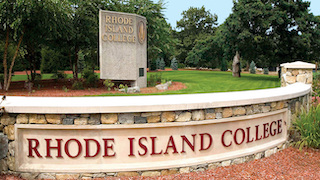
Rhode Island College entrance

For More Information

Department of English

In the Department of English we explore texts through a variety of perspectives and teach students to write effectively in several modes.